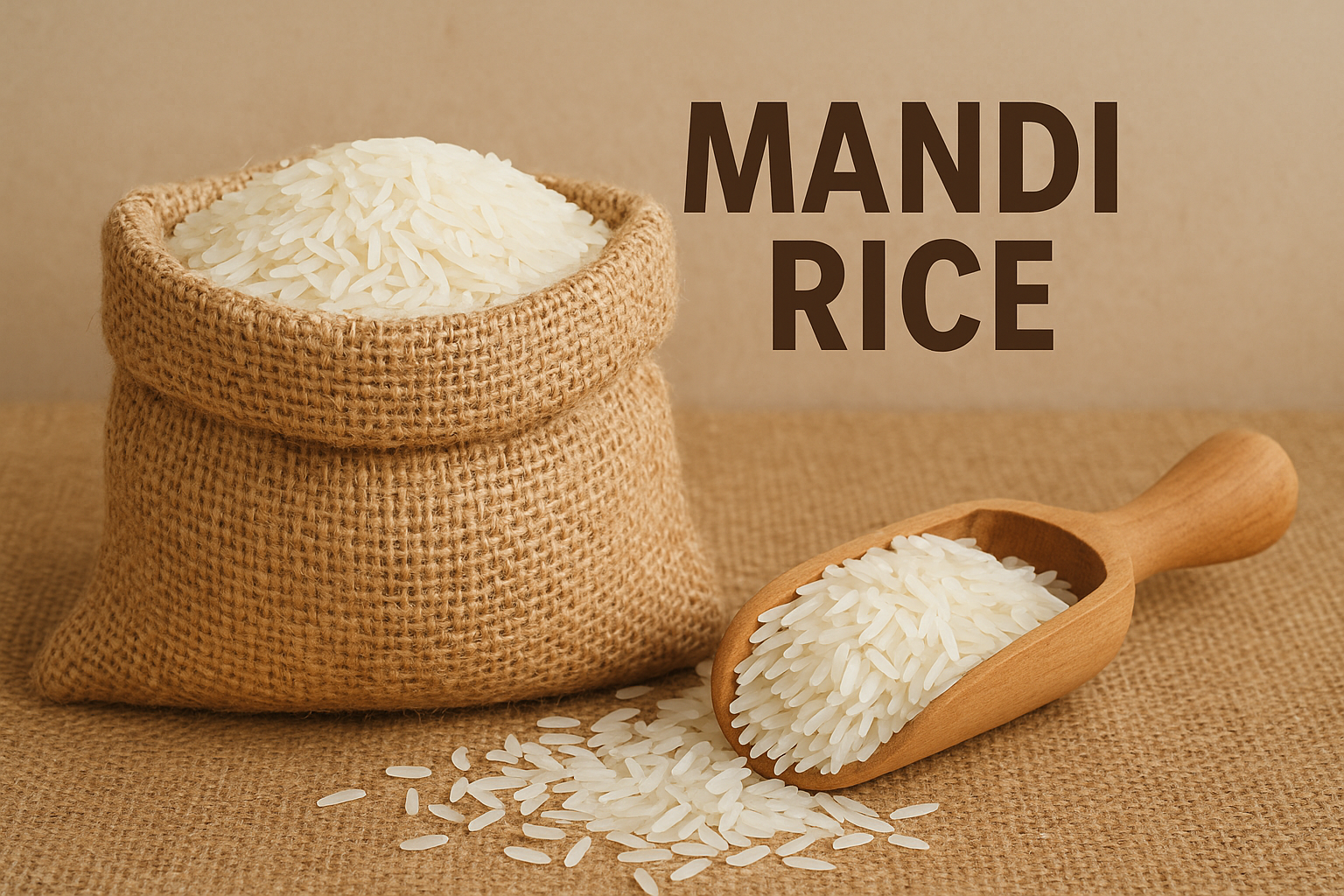
Rice is a daily food for millions of people in India and across the world. Yet, when people search online for “mandi rice”, many are unsure what it actually means. Is mandi rice different from branded rice? Is it cheaper? Who buys it? How are mandi rice prices decided?
This article answers all those questions.
What Is Mandi Rice?
Mandi rice is simply rice that comes through government-regulated markets called mandis (also known as APMC markets). These mandis are official places where farmers bring their crops to sell, and buyers such as traders and rice mill owners come to purchase them. The system is designed to make trading fair and transparent, so farmers get a reasonable price and buyers get quality produce.
In easy terms, the process works like this: farmers bring paddy (rice with its outer husk) to the mandi and sell it. Rice millers then buy this paddy and remove the husk to make edible rice. This rice, after processing, is known as mandi rice. It is usually sold in large quantities, often in sacks, and does not have attractive packaging or brand labels like the rice you see in supermarkets. This is why mandi rice is generally more affordable while still being good in quality.
What Is a Mandi?
A mandi is an official market set up by the government where farmers can sell their crops directly to buyers. In India, these markets are usually managed by organizations called APMCs (Agricultural Produce Market Committees). The purpose of a mandi is to create a safe and regulated place for buying and selling agricultural products like rice, wheat, vegetables, and pulses.
The main aim of mandis is to protect farmers and buyers. They help farmers get fair prices for their produce, make sure trading is open and transparent, and reduce the chances of farmers being cheated by middlemen. Mandis exist in almost every state and play a very important role in moving food from farms to markets, making them a key part of the agricultural supply chain.
Difference Between Mandi Rice and Branded Rice
Many people confuse mandi rice with low-quality rice. This is a common misunderstanding.
Key Differences Explained Simply
| Feature | Mandi Rice | Branded Rice |
|---|---|---|
| Packaging | Usually loose or gunny bags | Branded, sealed packs |
| Price | Lower | Higher |
| Marketing cost | Almost none | High (ads, branding) |
| Quality | Can be very good | Consistent but not always superior |
| Buyers | Traders, wholesalers, hotels | Retail consumers |
Types of Rice Sold in Mandis
Mandis sell almost all major rice varieties that are commonly available in the market. These varieties differ in taste, appearance, cooking behavior, and price.
Common Mandi Rice Varieties
| No. | Rice Variety | Description / Common Use |
|---|---|---|
| 1 | Basmati Rice (Traditional, 1121, 1509, Pusa) | Long-grain, aromatic rice mainly used for biryani and special dishes |
| 2 | Non-Basmati Rice | Short to medium grain rice used for daily meals |
| 3 | Sona Masuri | Lightweight, soft rice commonly used in South India |
| 4 | IR64 | Widely consumed rice, affordable and suitable for regular cooking |
| 5 | Ponni Rice | Popular in Tamil Nadu, good for steamed rice |
| 6 | Parboiled Rice | Partially boiled rice, stronger grains, commonly used in hotels |
| 7 | Raw Rice | Unprocessed rice, soft texture after cooking |
| 8 | Broken Rice | Smaller broken grains, mainly used in food processing and animal feed |
How Are Mandi Rice Prices Decided?
Mandi rice prices are not fixed and can change from time to time. They depend on several simple and practical factors, which is why many people search for mandi rice prices regularly. The most important factor is supply and demand. When there is a high demand for rice and less availability, prices usually go up. On the other hand, if there is plenty of rice available and fewer buyers, prices tend to come down.
Another key factor is the quality of the paddy used to make the rice. Paddy with lower moisture, bigger grains, and fewer broken pieces produces better-quality rice, which sells at a higher price. Prices also depend on the season, they are often lower just after harvest when fresh stock arrives and may increase during months when supply is limited.
Government policies, such as the Minimum Support Price (MSP) and rules on exports, also influence prices. Lastly, prices can differ from one mandi to another because of location, transportation costs, and local demand.
Mandi Rice Price vs Market Rice Price
| Mandi Rice Price | Market (Branded) Rice Price |
|---|---|
| No branding cost | Branding cost included |
| No retail packaging | Retail packaging |
| No advertising expense | Advertising & marketing |
| Sold in bulk | Transportation costs |
| Fewer middlemen | Distributor & retailer margins |
| Lower price | Higher price |
Who Buys Mandi Rice?
Mandi rice is not meant only for farmers or traders. Many people across the food supply chain buy rice directly from mandis because it is cost-effective and available in large quantities.
Common buyers include rice wholesalers, retail shop owners, hotels, restaurants, caterers, food processing companies, and exporters. Even some households choose to buy mandi rice directly to save money, especially when they want good quality rice at a lower price.
Is Mandi Rice Safe to Eat?
Yes, mandi rice is safe to eat when it is properly milled, stored correctly, and kept free from moisture and pests. These basic conditions ensure the rice remains clean, fresh, and suitable for consumption.
In fact, many well-known rice brands buy their rice from mandis and then repackage it under their own labels. This means the rice itself is often the same; only the packaging and branding are different.
How to Check the Quality of Mandi Rice
When buying mandi rice, checking the quality is simple and does not require expert knowledge. Good quality rice should have grains that are uniform in size, dry to the touch, and free from any foul smell.
Also make sure there are very few broken grains and no visible insects. If you are unsure about the quality, it is always a good idea to ask for a small sample before purchasing in bulk, so you can check it properly at home.
Mandi Rice Prices Today
Mandi rice prices can vary a lot depending on the location, type of rice (like Basmati or long-grain), and quality. In India, common rice usually costs around ₹3000–₹4000 per quintal (₹30–₹40 per kg), while premium Basmati can be much higher at ₹60–₹90+ per kg wholesale.
In Nigeria, 50 kg bags of rice can range roughly from ₦65,000 to ₦100,000 or more, depending on whether it is parboiled or long-grain. Prices in both countries fluctuate frequently because of changing market conditions.
Government Role in Mandi Rice Trade
The government plays a major role in mandi operations. Government Involvement Includes:
- Setting MSP for paddy
- Regulating mandi fees
- Ensuring fair trade practices
- Supporting farmers during price drops
This system helps protect both farmers and buyers.
Advantages of Buying Mandi Rice
- Lower cost
- Bulk availability
- Wide variety
- Direct sourcing
- Good profit margin for traders
Disadvantages of Mandi Rice
- Not suitable for small quantity buyers
- Requires storage space
- Quality may vary by seller
- No brand guarantee
Is Mandi Rice Better Than Branded Rice?
There isn’t a simple answer to whether mandi rice is better than branded rice; it depends on what you value most.
If you prefer branding, packaging, and convenience, branded rice might be more suitable. But if your priority is saving money and buying in bulk, mandi rice is often the better choice. Many experienced buyers choose mandi rice because they know how to check and understand the quality themselves.
How to Buy Mandi Rice as a Beginner
If you are new to buying mandi rice, start by visiting a reputable mandi and talking to several sellers. Compare their prices and inspect samples carefully to check the quality.
Begin with a small quantity so you can test it at home. Over time, as you become familiar with different grades and types, you’ll be able to identify good quality mandi rice easily.